Updates ·
Building LearnPath
I spend a lot of my time thinking about how people learn, so I wanted to know what goes into the software that delivers it. Most learning platforms are big and heavy. I wanted to see how small one could be and still do the job.
That became LearnPath, a lightweight learning management system at lms.avclub.us. It was also how I learned Claude Code. Every feature started as a conversation, got built in small commits, and got reviewed before it shipped.
What it does
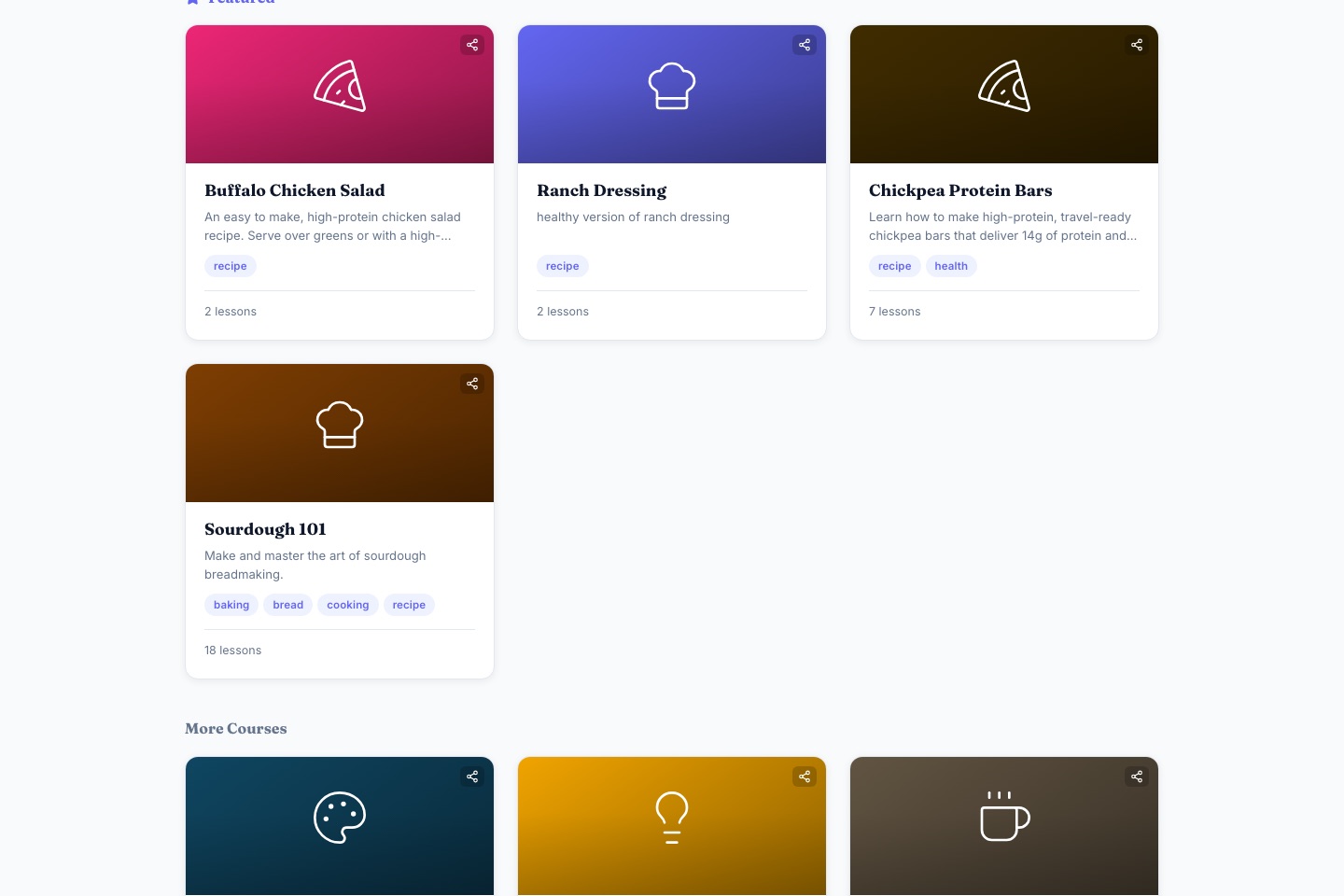
It runs the core loop: take a pre-quiz, work through the lessons, take a post-quiz, and get a PDF certificate. Anyone can browse public courses. Signing in adds progress tracking, so you pick up where you left off. A course can also run in Article Mode, which skips the quizzes and reads like a short guide.
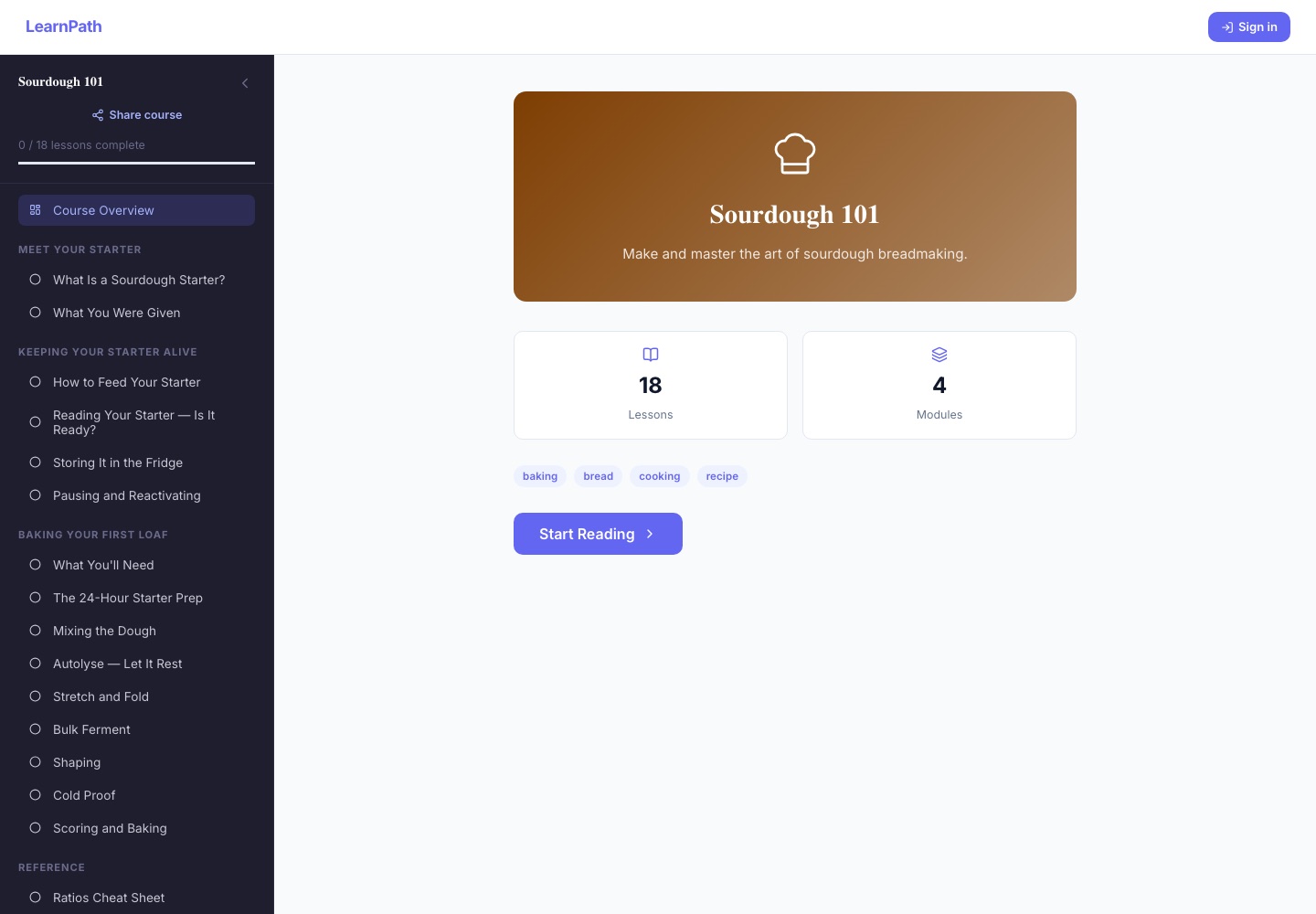
Most of my test courses are recipes, because that's what I had on hand. Sourdough 101 has 4 modules and 18 lessons, and yes, Roy is in there.
On the building side:
- Course Builder: rich text, images, tables, video and file lessons, and drag-and-drop ordering. A readiness check runs before you publish.
- Quick create: a new course needs only a title. It can also start from an outline or as a copy of another course.
- Overview: every course's readiness, enrollment and progress on one page, with a list of gaps to fix.
- Team: invite people or import them from a CSV, put them in groups, and keep private courses visible to the right groups.
Under the hood
LearnPath is React and Vite on Vercel, with Supabase for sign-in and the database. It has three roles: learners, authors and admins. Early on, the permission checks lived only in the interface. A security review caught that, and now the database enforces every rule with row-level security. Authors can only edit their own courses, and learners can only write their own progress.
What's next
A stronger password rule and rate limiting. After that, I want to bring back two features I parked: an AI course-outline generator and emailed certificates. Both need to run on a server so no API keys end up in the browser.